So. You've got the leading video automation platform on your side. But what stories are you going to tell? Dip into our community blog for ideas, inspiration and plenty of handy how-tos.

February 18, 2026
February 18, 2026
LinkedIn's algorithm rewards precision. According to aggregated data from thousands of LinkedIn posts, headlines containing specific numbers – whether percentages, timelines, or quantities – consistently outperform their number-free counterparts.
Numbers function as perceptual anchors in our information-saturated feeds. When scrolling through LinkedIn, the human brain processes numerical data differently than text – it creates an instant focal point that disrupts pattern recognition and forces attention.
This phenomenon extends beyond simple attention-grabbing. Specific numbers trigger five distinct cognitive responses that improve content performance:
The cumulative effect transforms abstract corporate updates into concrete value propositions that professionals actually want to engage with.
Not all numbers carry equal weight in driving engagement. Analysis of top-performing posts reveals five categories that consistently elevate content performance.
Quantities and scale indicators provide immediate context and impact framing. Posts mentioning "5,000 customers" or "12 new partnerships" outperform vague references to "many customers" or "several partnerships" by creating mental images readers can grasp instantly.
Timeframes inject urgency and set clear expectations. "In 30 days" or "2025 outlook" posts see higher engagement because they promise timely, relevant information with defined boundaries.
Milestones and anniversaries add narrative weight to corporate storytelling. "10 years," "100th product launch," or "50 innovations" transform routine updates into moments worth celebrating and sharing.
Outcome metrics drive the highest quality engagement because they signal concrete achievement. Posts citing "38% emission reduction" or "20-day lead time improvement" attract professionals seeking proven strategies and benchmarks.
Industry statistics position brands as insight providers rather than self-promoters. "73% of buyers now prefer..." frames the company as a thought leader sharing valuable market intelligence.
The precision paradox reveals itself most clearly when comparing specific versus rounded numbers. Posts citing "14.3% growth" consistently outperform those claiming "15% growth," despite the rounded figure being nominally higher.
This counterintuitive pattern aligns with processing fluency theory from cognitive psychology. When readers encounter oddly specific numbers, their brains interpret this precision as evidence of careful measurement and authentic reporting. Rounded numbers, conversely, trigger skepticism – they feel like marketing approximations rather than genuine data points.
The implication for content creators is clear: resist the urge to round up. That awkward decimal point or unusual percentage signals authenticity in ways that polished, rounded figures cannot match. It's the difference between "approximately 50 customers" and "47 customers" – the latter feels real because it is real.
Placement matters as much as precision. Top-performing posts consistently position numbers within the first eight words of their headlines or opening lines.
This isn't arbitrary – it reflects how LinkedIn users consume content. The platform's feed design means readers make engagement decisions based on roughly 150 characters of preview text. Numbers placed early serve as immediate value signals, improving what LinkedIn calls "thumb-stop rate" – the percentage of users who pause scrolling to read more.
Posts following this eight-word rule see measurably better outcomes across all engagement metrics. They generate more meaningful comments, higher save rates, and stronger impressions-per-follower ratios. The pattern holds regardless of industry, company size, or audience demographics.
The data reveals a stark performance divide between number-rich and number-poor content. Nearly two-thirds of posts in the top engagement decile include at least one number in their opening line. Posts without early numerical hooks are twice as likely to land in the bottom half of performance rankings.
This pattern transcends industry boundaries. Manufacturing companies reporting production metrics, SaaS firms sharing customer growth, consulting practices citing survey data, financial institutions discussing market movements, healthcare organizations presenting patient outcomes, and public sector bodies highlighting citizen impact – all see the same performance boost from quantified storytelling.
The consistency suggests this isn't a temporary algorithmic quirk but a fundamental aspect of how professionals evaluate content value. Numbers serve as universal credibility markers in B2B communication, signaling substance over style and research over rhetoric.
The evidence points to a simple but powerful content optimization strategy: treat numbers not as decorative elements but as performance mechanics. Every post presents opportunities to transform vague claims into quantified stories.
Instead of "significant growth," specify "23% year-over-year expansion." Replace "improved efficiency" with "12-minute reduction in processing time." Transform "strong customer satisfaction" into "4.7/5 average rating from 1,200 reviews."
The shift from qualitative to quantitative storytelling requires discipline but delivers measurable returns. Companies implementing this approach report immediate improvements in engagement quality, follower growth rates, and – most importantly – meaningful business conversations sparked by their content.
Ready to implement data-driven LinkedIn strategies? Start by auditing your last ten posts. Count how many include specific numbers in the first line. Then commit to including at least one precise, meaningful number in every headline you write for the next month. Track the performance difference – the numbers will speak for themselves.
February 10, 2026
February 10, 2026
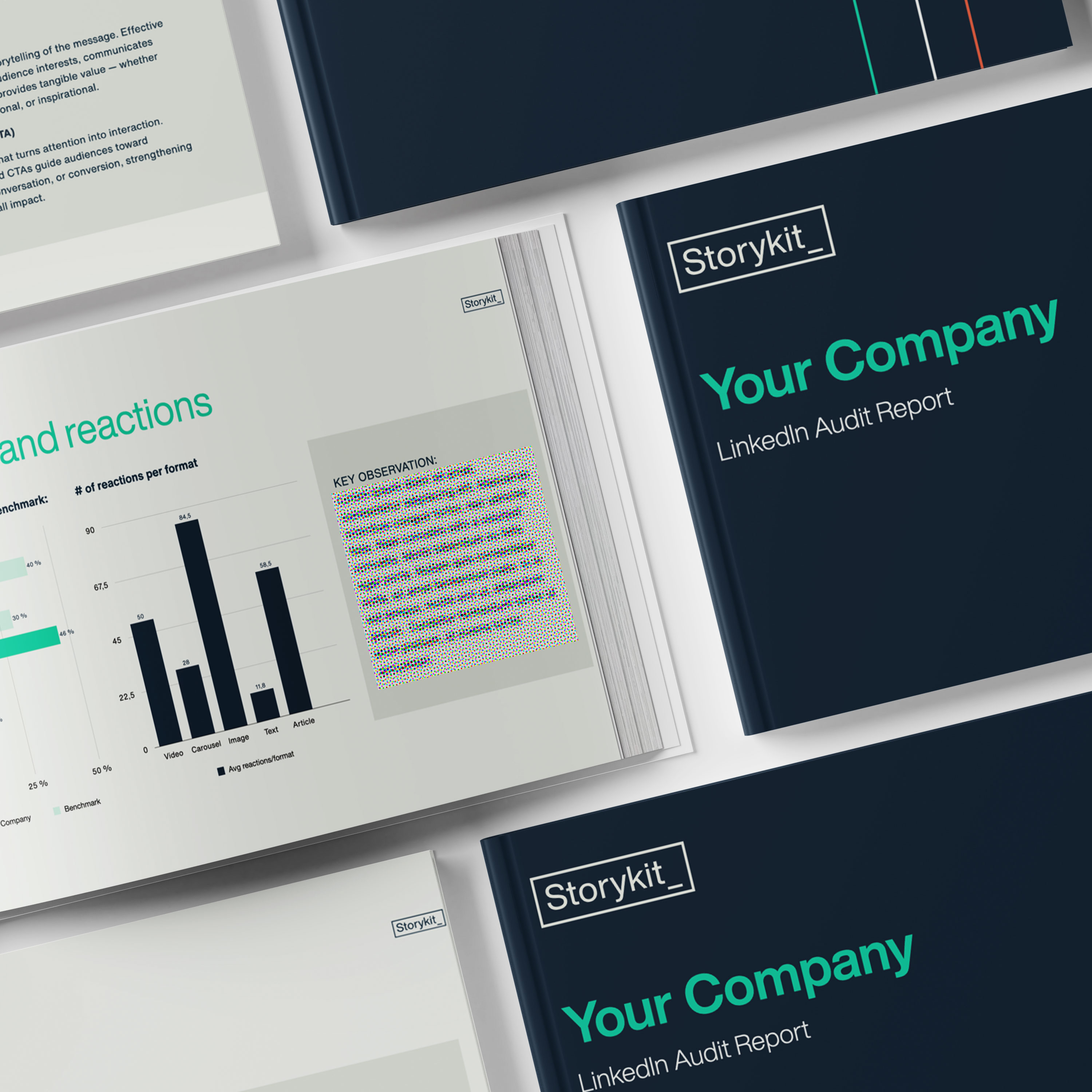
Marketing teams trying to won on LinkedIn often share a common challenge: they see likes and impressions, but miss the patterns that matter. This unique audit changes that, by turning raw numbers into clear, actionable strategy.
– Most companies track their LinkedIn performance, but very few actually analyze what drives it, says Peder Bonnier, CEO at Storykit.
– This audit gives teams the context they need – showing not just how they're performing, but why certain content works and where the biggest opportunities lie.
The audit examines performance across four critical areas that research shows determine LinkedIn success:
– We've analyzed thousands of LinkedIn posts across industries, explains Jonna Ekman, Marketing Director at Storykit.
– The difference between average and exceptional performance often comes down to mastering these four dimensions – yet most teams don't have the bandwidth to conduct this analysis themselves.
Here's what the audit gives you: benchmark comparisons against your industry, a clear breakdown of strengths and gaps, and prioritized recommendations you can act on immediately – all delivered in a focused 30-minute walkthrough. The best part? It's completely free, and no strings attached. Storykit simply reviews requests to ensure the audit will be genuinely useful for you.
February 3, 2026
February 3, 2026
A comprehensive analysis of thousands of LinkedIn posts reveals that while video content consistently outperforms other formats—generating higher dwell time, shareability, and follower growth—it represents only 10-15% of corporate posts compared to 70% for static images. In other words, there's a goldmine most companies are walking right past.
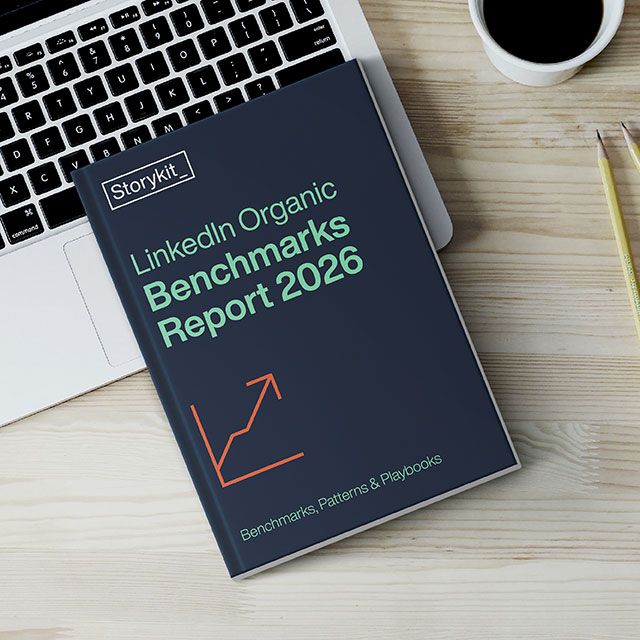
The LinkedIn Organic Benchmarks Report 2026 from Storykit identifies four critical performance gaps holding companies back. Most notably, top-performing accounts publish 3.5 times weekly versus the industry average of 1.8, and they maintain a balanced format mix of 40% video, 30% images, and 20% carousels—nearly the inverse of typical posting patterns. The good news? These are gaps anyone can close.
– To any company looking to truly win in social, my single best advice is simple: Publish more, says Peder Bonnier, CEO at Storykit.
The data backs this up—increasing frequency from 1-2 to 3-4 posts weekly drives 28-65% more impressions and doubles monthly follower growth. That's right, doubles.
The report, which Storykit developed to help companies benchmark their LinkedIn performance against industry standards, also reveals that timing and consistency matter as much as content quality. Companies that maintain regular publishing schedules see compounding benefits over time, with algorithmic favour rewarding accounts that demonstrate sustained activity.
Other key findings from the benchmark report include:
– We created this benchmark report because we saw too many companies flying blind on LinkedIn, says Jonna Ekman, Marketing Director at Storykit.
– The data clearly shows that small strategic shifts—more video, higher frequency, better timing—can dramatically improve results. And honestly? That should be exciting news for any marketing team ready to level up.

December 19, 2025
December 19, 2025
The math is brutal: that single "hero" post that you've worked so hard to perfect, will reach less than 3.5% of your Instagram followers on average. On Facebook? You're looking at 1.65%.
Meanwhile, your competitor is running a simple 12-day series – nothing fancy, just consistent daily posts repurposed from existing content. By day 12, they've accumulated 10-15x your total reach and built momentum that carries through January.
The logic is simple: frequency beats perfection during the holidays.
Rather than banking everything on a single flagship campaign, smart holiday strategies revolve around consistency and audience connection. According to Buffer’s research, brands that post several times per week on LinkedIn tend to see larger reach and stronger engagement compared with lower frequencies.
That sounds overwhelming until you flip your approach. Instead of creating from scratch, successful brands are repurposing everything. Blog posts become quote cards. Customer testimonials transform into video series. Product descriptions turn into daily tips.
Take Svevia's approach with Storykit: they transform press releases and internal updates into text-driven videos at scale. "The videos we make in Storykit get much more engagement than if we just post text or an image," their team reports. The key insight? They're not creating new content – they're reformatting what already exists.
Daily posting does something remarkable – it signals reliability. While competitors go dark between campaigns, your consistent presence builds trust. This trust translates directly to sales. Also: The compound effect is remarkable. Each post on your page might individually reach 3% of followers, but across 12-24 days, you're achieving cumulative reach that no single post could match. Plus, the algorithm rewards consistency – platforms like Instagram and TikTok favor accounts that post frequently, boosting visibility for active creators.
Here's where automation transforms theory into reality. The smartest teams are batching their entire holiday social distribution in advance, and actually taking time off while content publishes automatically.
Start with what you have. Pull quotes from your best-performing blogs. Screenshot customer reviews. Grab product photos from your catalog. Each asset becomes one day in your series. A 500-word blog post easily yields 5-7 social videos when you extract key points, statistics, and conclusions separately.
Video amplifies everything. Instagram Reels reach 15% of followers on average – nearly 5x the reach of standard posts. On LinkedIn, video gets 5x more engagement than images. Even simple text-driven videos outperform static graphics, especially when subtitled for silent viewing.
When the holiday kicks in: watch what happens. While others stress over their perfect posts, you'll be building compound engagement, day after day, post after post. Your team gets to actually enjoy the holidays while your automated series keeps working.
The future of holiday marketing isn't about the perfect post. It's about showing up consistently when your audience needs you most.

December 8, 2025
December 8, 2025
Here's the uncomfortable truth about social media in 2026: The brands treating posting like a precious event are getting buried by those who've turned it into a daily habit. And before you say "quality over quantity," let me stop you right there. The data tells a different story.
Recent platform data shows that LinkedIn Pages posting 11+ times per week generate roughly 17,000 more impressions per post and triple the engagement compared to those posting sporadically. On Instagram, brands posting Reels daily see exponentially higher discovery rates. TikTok's algorithm literally rewards accounts that feed it consistent content by expanding their reach to new audiences.
But here's where it gets interesting: The winners aren't just posting more – they're posting smarter. They've discovered that text-driven, captioned videos are the perfect format for maintaining this pace without burning out their teams or budgets.
Here's what separates the overwhelmed from the overachievers: systematic repurposing. Every piece of existing content becomes multiple videos. That quarterly report? It's now 12 stat-highlight videos. Your latest blog post? Transform it into a key quote card, a three-tip summary, a myth-buster snippet, and a provocative question post.
Aspia, the management consulting firm, produces 30 videos monthly using this exact approach. Their result? A 30% surge in follower base within a year, plus approximately 1.6 million EUR saved annually by eliminating agency costs. They're not creating more – they're distributing smarter.
The math is simple but brutal. To compete in 2026, you need to post video content at least once daily across your priority platforms. For a lean team, that means 30+ videos per month minimum. Manually? Impossible. With automation? Inevitable.
Modern text-to-video automation changes the economics entirely. Paste your text or URL, select your format (1:1 for LinkedIn, 9:16 for Reels, 16:9 for YouTube), add automated captions, and publish. What used to take hours now takes minutes. PostNord created 40 unique recruitment videos in a single month using this workflow.
"The most scalable, algorithm-friendly content already exists in your written materials," explains Fredrik Strömberg, Chief Innovation Officer at Storykit. "It just needs the right visual format to thrive on social platforms. Our AI bridges that gap instantly."
The platforms have spoken through their algorithms: frequency wins. But frequency without burnout requires automation. And automation without strategy is just noise.
Pick one piece of content today. Turn it into four text-driven videos: a bold stat, a key quote, a quick tip, and a thought-provoking question. Post them throughout the week. Track the engagement difference. Then systematize the process.
Because while others debate whether daily posting is sustainable, smart teams are quietly dominating feeds with 200% more video at 95% less cost. The algorithm doesn't care about your excuses. It only cares about consistency.

December 8, 2025
December 8, 2025
In this article we’re going to introduce you to the most current and impactful trends in social media marketing, along with the cost-effective marketing tips you need to keep up and get results.
More posts = greater visibility
To stand out in 2026's crowded social media feed, frequent posting is essential. More content equals increased visibility and engagement.
Quality content = lower costs in paid social
High-quality content wins on social media, costing less per engagement. Algorithms favor engaging content, so better content means more savings.
Video = more engagement
Video content is king for driving engagement. In 2026, incorporating video can significantly boost user interaction and interest x5.
So you need to do all the above. You need more content for your organic feed. You need to identify quality content for your ads. And you need all of that content to be in video form for ultimate engagement.
How can you possibly keep up with this demand and save money?
The answer’s easy. Storykit it.
Here are 3 ways Storykit can save you money and get you better results in 2026.
“Moving your content production in-house will save you time and money. If every content item needs to be revised, you’ll never be able to produce the volume you need. The only way to scale production is by letting the person producing make all editorial decisions.” -Peder Bonnier, CEO of Storykit
In the past, agencies and freelancers were the go-to for video content, especially when the social media landscape was less saturated and basic participation yielded results.
In addition, the threshold for video creation was also a lot higher. Expensive equipment and expert editing skills were a requirement.
However, with Storykit, the barriers to producing quality video content have significantly lowered. This means that businesses can now efficiently create what they need in-house with no prerequisites.
In 2020, BKS Bank faced challenges with their external video production – high costs and slow turnaround times were hindering their ability to produce content at the needed scale. They needed the flexibility to make quick changes and produce a high volume of videos. The solution? Bringing their video production in-house. This strategic move allowed them to efficiently produce the quantity of content required, with the agility to adapt quickly.
“People are scared of boring their audience and posting too much of the same stuff. But the moment that you are getting tired of your message is just when it is starting to stick for your audience.” -Jonna Ekman, Marketing Director at Storykit
In the realm of social media, video content reigns supreme. Your audience craves a steady stream of engaging material, and keeping pace can seem daunting.
The solution? Transform your existing content (blogs, case studies, ebooks, reports, etc.) into video with Storykit.
All you have to do is simply copy your text and paste it into Storykit AI and you can turn one blog into an abundance of videos for your social media channels, allowing you to spread your messages more widely than you might have imagined.
Remember, the key to effective social media marketing isn't always about creating brand-new content. It's about smartly repurposing what you have to continuously engage and captivate your audience.
Further reading: 22 ways to repurpose your existing content for social media with video
“When you buy an ad in a magazine, it will always cost you the same amount of money no matter how good your ad is. This isn’t the case on social media platforms.” -Sofia, Performance Marketing Manager at Storykit
On social media platforms like Facebook and LinkedIn, the quality of your ad significantly impacts its performance and cost-efficiency. Unlike traditional ads, where you pay a set price for space, social media operates on a bidding system. Here, high-quality creatives gain more visibility and are more cost-effective.
While paid social media marketing can rapidly reach your target audience and generate results, it also poses the risk of quickly depleting your budget if not managed wisely. The key?
Focus on creating better quality creatives by testing different options quickly with Storykit.
Sofia Eriksson, Performance Marketing Manager at Storykit, offers these insights on finding high-quality creatives:
If you find that your video ads on a platform like LinkedIn are expensive and underperforming, don't wait for it to improve. Act promptly by testing different text or assets. High-quality content is crucial for efficient and effective paid social media marketing.
Further reading: 4 top LinkedIn video ad examples and why they work
As we jump into 2026, the key to saving money in marketing hinges on working smarter, not just harder. Embracing in-house content creation with Storykit places you firmly in the driver's seat.
This approach empowers you to produce a higher volume of organic content, experiment with varied ad creatives for paid campaigns, and achieve success without the added stress and expense of external agencies.
Moreover, leveraging a platform like Storykit amplifies this efficiency. It equips your team to produce professional, brand-aligned content at scale, streamlining your content creation process.
By adopting these tactics, you're setting your business up for a more cost-effective and impactful marketing journey in the coming year.
We’ve teamed up with Daniel Bromberg, paid ads expert at LinkedIn, to give you the ultimate playbook on LinkedIn video ads.


Need videos for social media, sales, HR, or internal communication? With Storykit, any team can create professional videos. These videos can match their brand and work for any platform, format, or language. No editing skills are needed. Whether for LinkedIn, corporate presentations, or global campaigns, Storykit ensures your videos are engaging and optimised for impact.
It’s that time of year again—when we all start scrambling for ideas and templates to piece together our social media plan for the new year. Trust me, I’ve been there too. The endless Googling, the overcomplicated strategies… it can get overwhelming fast.
That’s why we're here to make it easy for you. We're giving you our social media plan for 2025—complete with all the resources and tips to help you nail it without the stress. Ready to steal it?