So. You've got the leading video automation platform on your side. But what stories are you going to tell? Dip into our community blog for ideas, inspiration and plenty of handy how-tos.

May 24, 2023
May 24, 2023
Whether you're an entrepreneur looking to promote your business, or a professional seeking to establish yourself as a thought leader in your industry, posting videos on LinkedIn can help you achieve your goals.
In this article, we'll walk you through the simple steps required to post a video on LinkedIn, so you can start creating engaging content and impressing your professional network.
Video content has become an integral part of social media marketing, and LinkedIn is no exception. With its growing popularity and reach, LinkedIn has introduced several video features that can help businesses and individuals showcase their brand and connect with their audience.
Before you start creating your video content, it's important to understand what LinkedIn has to offer. By educating yourself on the platform's video features, you'll be able to make informed decisions on what works best for you and your brand.
First things first, let's cover video formats and requirements. LinkedIn accepts several video file types, including MP4, MPEG-1, MPEG-4, and AVI. Additionally, the platform recommends a resolution of 360p to 1080p, with a maximum file size of 5GB. This allows for high-quality videos that are optimized for the LinkedIn platform.
It's important to keep in mind that the video format and quality can have a significant impact on the user's experience. A high-quality video can capture the viewer's attention and keep them engaged, while a low-quality video can lead to a negative perception of your brand.
When it comes to sharing video content on LinkedIn, you have two options: native videos and shared links. Native videos are hosted directly on LinkedIn and will automatically play in the user's feed. This makes it easier for users to view and engage with your content, as they don't have to leave the platform.
Shared links, on the other hand, redirect to an external website to watch the video. While this can be a good option for longer videos or videos that require additional context, it can also lead to a drop in engagement as users may not want to leave the platform to view the content.
It's important to consider your goals and the type of content you're sharing when deciding between native videos and shared links. If you want to maximize engagement and reach, native videos may be the better option.
Now that your video is ready, it's time to share it with the world. By following these steps, you can post your video on LinkedIn and reach a wider audience.
Posting a native video on LinkedIn is a great way to showcase your content and reach a wider audience. To post a native video, navigate to your LinkedIn homepage and click the "video" icon.
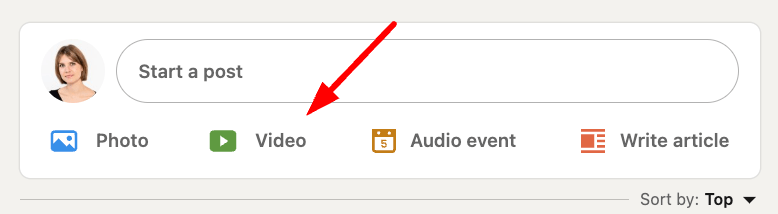
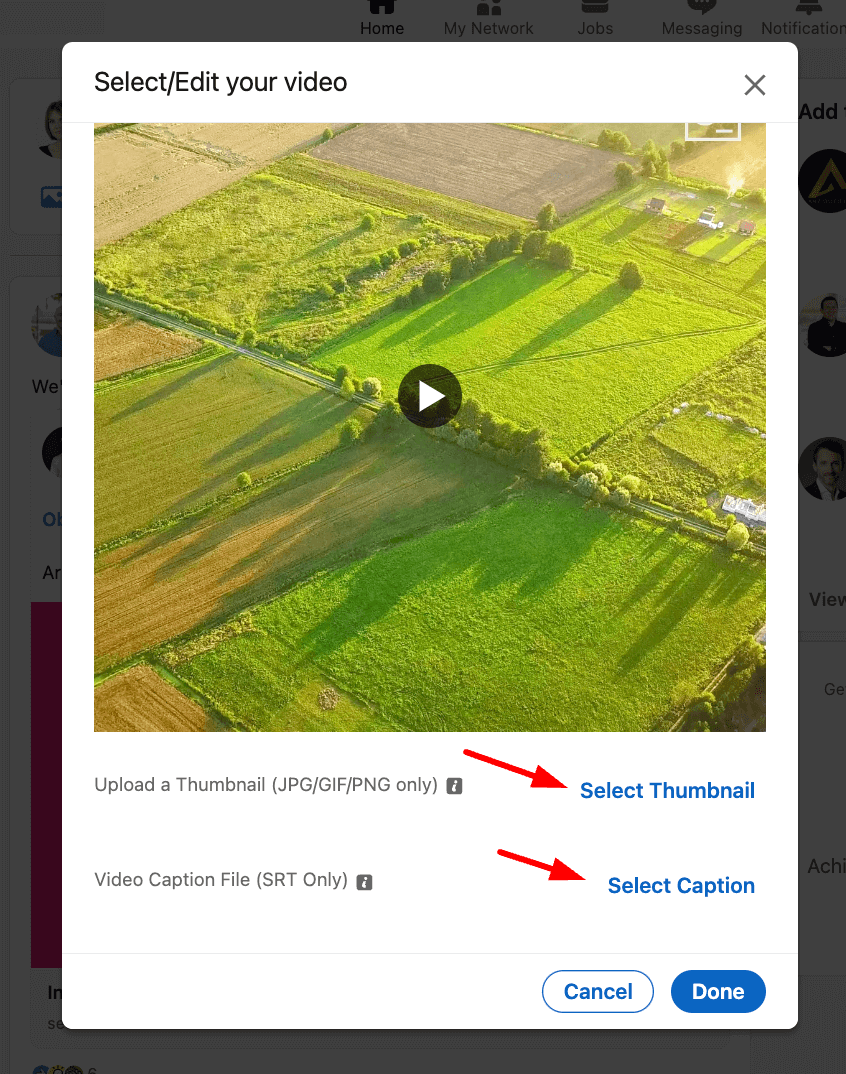
From there, upload your video file. Next you can select a thumbnail and captions if you need to.
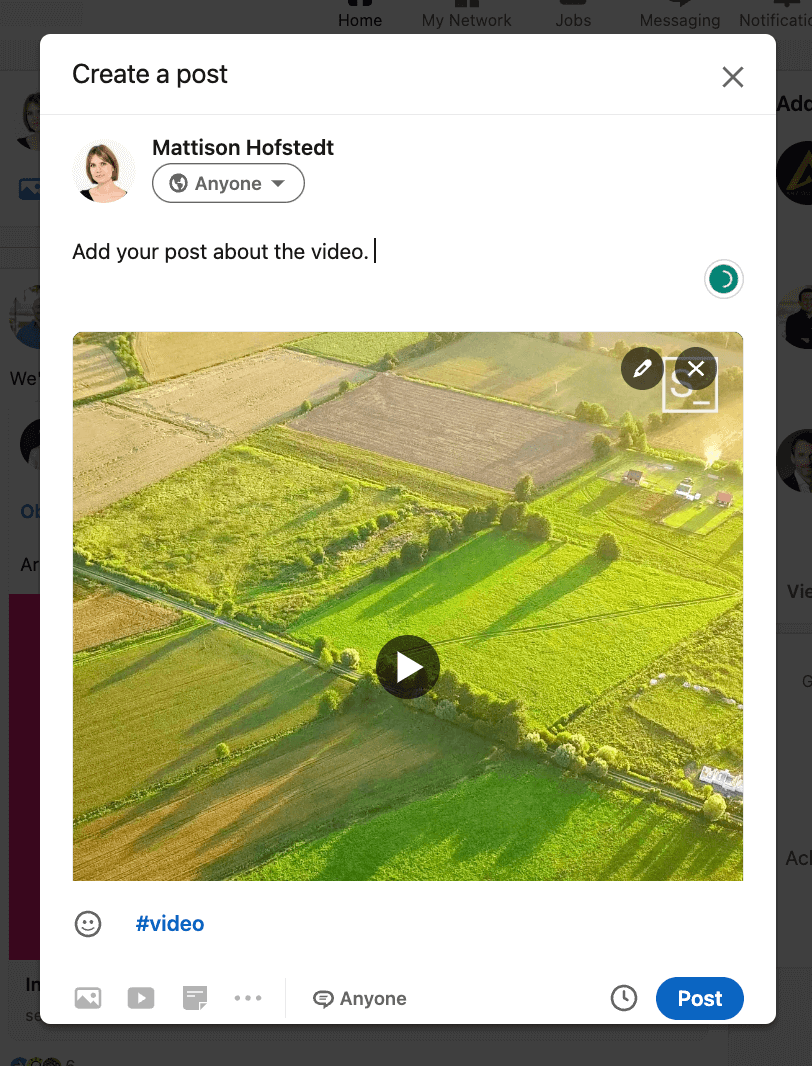
Then just add any post text about the video and you’re done! Be sure to include a brief summary of your video's content and any relevant keywords. This will help your video show up in search results and attract the right audience.
If you want to share a link from an external platform, such YouTube or Vimeo it's easy to do on LinkedIn. Simply copy the link and paste it into the message field where you write your post.
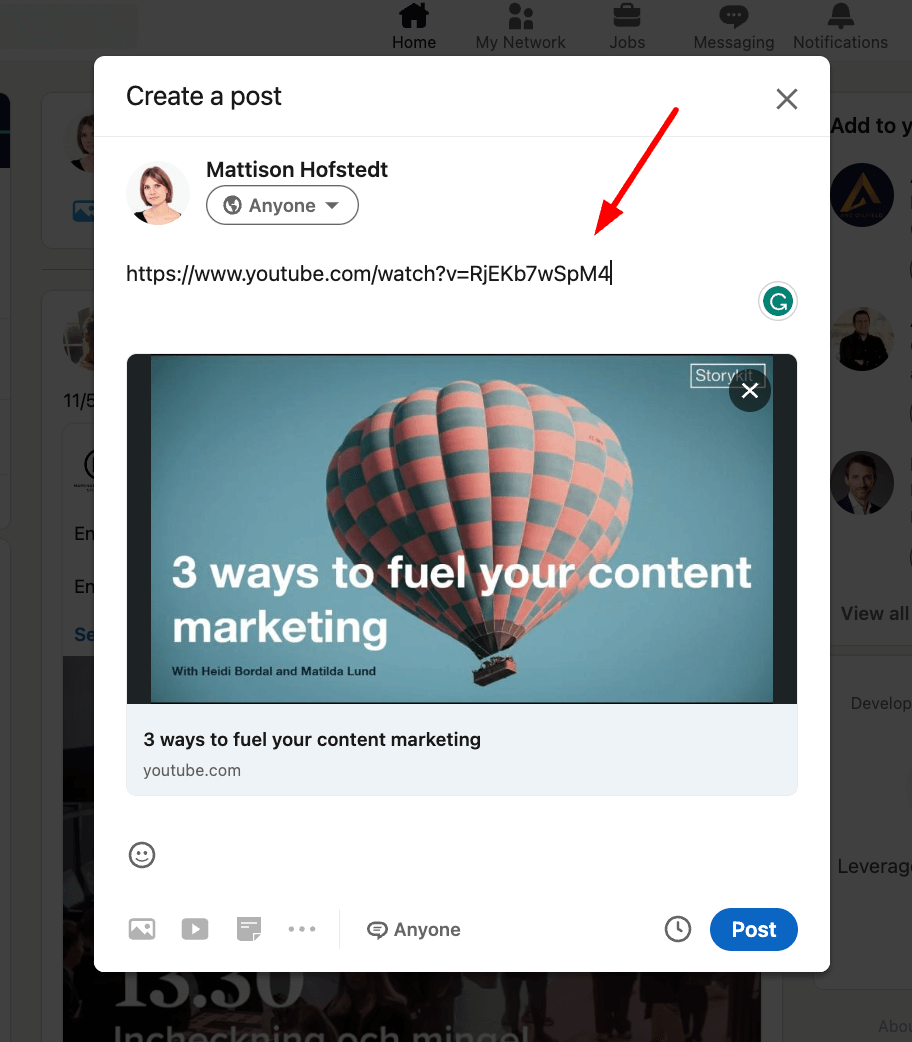
LinkedIn will automatically detect that the link is an external one and will fetch a preview of the content, including a title, description, and thumbnail image.
If you don’t want the link to show in your message field, you can delete it and the video thumbnail with the link to the video will stay there.
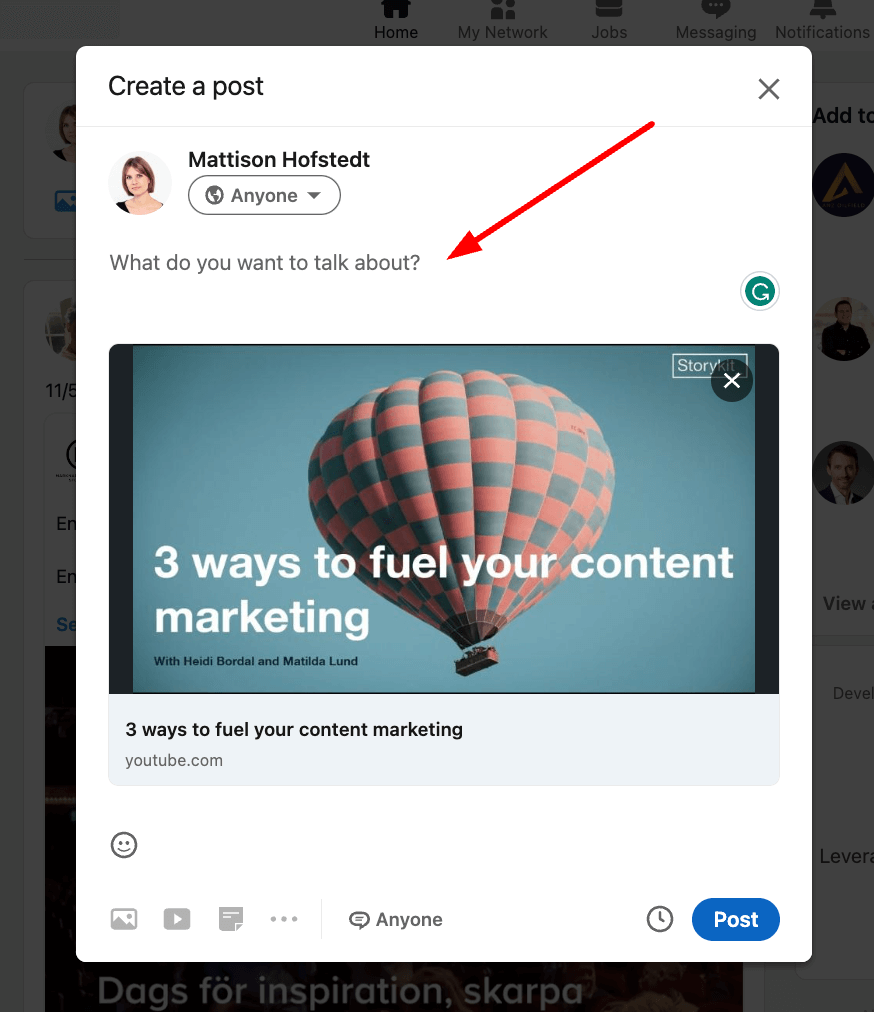
To maximize the reach and engagement of your video, consider tagging relevant connections in your post and adding industry-specific hashtags. This will help your content show up in search results and reach a wider audience.
When tagging connections, be sure to choose individuals who are relevant to the content of your video. This will help your video show up in their feeds and increase its visibility among their networks.
Similarly, when adding hashtags, choose keywords that are relevant to your video's content and industry. This will help your video show up in search results when users are looking for content related to your topic.
In conclusion, posting videos on LinkedIn is a great way to engage with your audience and share your content. By following these steps and tips, you can effectively share your video content and engage with your audience on this professional platform.
Remember, building relationships and providing value to your audience is key to maintaining engagement and trust.

May 24, 2023
May 24, 2023
This change, fully implemented post-Q2 2023, marks the end of an era for Message Ads and heralds the rise of Click-to-Message Ads, and a time for businesses to adapt and rethink their LinkedIn advertising strategies.
Click-to-Message Ads are a blend of two powerful ad formats, Single Image Ads and Conversation Ads, creating an exciting and effective way to engage with your target audience.
While Single Image Ads are known for their simplicity and effectiveness, Conversation Ads allow for personalized and automated conversations with potential customers.
With Click-to-Message Ads, the ad starts as a Single Image Ad in the LinkedIn news feed, but when a user clicks on it, they are taken to their inbox where they can initiate a conversation with the advertiser on their own terms.
This creates a better user experience and is more cost-effective for advertisers, as they are charged by the click rather than by the send. Click-to-Message Ads are the perfect solution for advertisers who want to reach their audience in a personalized and engaging way while also maintaining respect for their users' preferences.
Further reading: Goodbye Message Ads, Hello LinkedIn's New Click-to-Message Ads
With the sunsetting of traditional Message Ads, LinkedIn offers a variety of advertising formats that can help businesses effectively reach and engage with their target audience. Two noteworthy alternatives to consider are Video Ads and Sponsored Content.
Video Ads on LinkedIn present an unparalleled opportunity to capture the attention of professional audiences through dynamic and engaging content. These ads allow you to tell your brand's story, showcase your products or services, and connect with viewers on a more personal level. Effective video ads often feature:
Sponsored Content allows you to promote your posts directly in the LinkedIn feed, reaching more users than organic content alone. This format is versatile, supporting text, image, and even carousel formats, giving you the flexibility to tailor your approach based on your marketing goals. Key advantages of Sponsored Content include:
In the ever-evolving landscape of LinkedIn advertising, the recent phase-out of traditional Message Ads underscores the importance of adaptability and a diversified ad strategy. Embracing various ad formats such as Video Ads and Sponsored Content not only ensures your message reaches a wider audience but also prepares your marketing efforts for future platform changes.
Staying agile, continually testing new approaches, and being willing to pivot based on platform innovations and audience feedback are key to maintaining a successful and resilient presence on LinkedIn. In the dynamic realm of digital marketing, a well-rounded and adaptable strategy is your best bet for long-term success.

May 23, 2023
May 23, 2023
If you're looking to make the most out of your LinkedIn marketing in 2023, you're in the right place!
LinkedIn is one of the most powerful social media platforms for businesses, and it's time to leverage its potential. In this guide, we'll cover everything you need to know about LinkedIn marketing in 2023.
From understanding its power to building a strong presence and creating engaging content, we've got you covered.
LinkedIn marketing has come a long way in recent years. It's no longer just a platform for job seekers and recruiters. With about 123.5 million active users using LinkedIn each day, it is now a powerful marketing tool for businesses of all sizes.
LinkedIn offers a unique opportunity to connect with professionals and decision-makers in your industry, build your brand, and drive traffic to your website.
In 2023, it's predicted that LinkedIn will continue to grow in popularity, with even more businesses using it as a part of their marketing strategy. As the world becomes more digital, LinkedIn has become an essential platform for businesses to establish their online presence and reach their target audience.
We're going to let you in on a secret before you get to the bottom of this article... Video is one of the best ways to drive more results LinkedIn—and they aren't hard to create either. Try creating professional videos for free (like the one below) using the text you already have.
LinkedIn is a powerful platform for businesses looking to reach a professional audience. With over 55 million registered companies and around 93% of B2B marketers using the platform for content marketing, LinkedIn is undoubtedly worth investing in. Whether you're looking to generate leads, build brand awareness, or establish yourself as a thought leader, LinkedIn is the platform to be on.
One of the biggest advantages of LinkedIn for B2B marketing compared to other social platforms is its ability to target specific demographics.
With LinkedIn’s targeting options, businesses can reach their ideal audience based on factors such as job title, industry, location, and more.
This means that businesses can tailor their content to their audience and ensure that their message is seen by the right people (not just guess).
Here are a few LinkedIn marketing trends that businesses should not ignore in 2023:
Before diving into LinkedIn marketing, it's crucial to set your goals. What do you want to achieve with your LinkedIn presence? Knowing what you're trying to achieve will make it easier for you to Here are a few goals to consider:
Once you've set your goals, it's time to optimize your LinkedIn business page!
Make sure your page is complete and up-to-date, with a clear description of your business and its offerings. Your LinkedIn business page is the face of your business on the platform.
It's crucial to create an appealing and informative page that tells visitors what your business is all about, your products and services, and why they should connect with you.
Create a compelling company description
The company description is one of the most critical sections of your LinkedIn company page. It's where you showcase who you are and what you do. Make sure your company description is clear, concise, and engaging. Use language that resonates with your target audience and highlights your unique value proposition. Don't be afraid to inject some personality into your description to make it more memorable.
For example, if you're a software company, instead of saying "We develop software solutions," you could say "At XYZ Software, we're passionate about creating innovative software solutions that help businesses streamline their operations and achieve their goals."
Remember, your company description is your chance to make a great first impression. Make it count!
Need inspiration? Check out the Storykit company page below.

Your banner image is the first thing visitors see when they visit your company page. It's essential to create an eye-catching banner that reflects your brand and captures your visitor's attention. Your banner image should be high-quality, visually appealing, and relevant to your business.
Consider using your banner image to showcase your products, services, or company culture. You could also use it to promote a specific campaign or event. Whatever you choose, make sure it aligns with your brand and messaging.
For example, if you're a travel company, you could use a banner image of a beautiful destination to inspire visitors to learn more about your travel packages and services.
Need inspiration? Check out the Salesforce page below.

Take advantage of LinkedIn's product and service features. This section allows you to showcase your offerings and provide detailed information to potential customers. Use high-quality images and videos to showcase your products and services in action.
Make sure to highlight the unique benefits of each product or service and how they can help your customers solve their pain points. Use customer testimonials or case studies to provide social proof and build credibility.
For example, if you're a marketing agency, you could showcase your services such as SEO, PPC, social media marketing, and content marketing. You could also provide case studies that demonstrate how your services helped clients achieve their marketing goals.
Need inspiration? Check out Hubspot’s CRM product page below.

Now that you've optimized your LinkedIn company page, it's time to start building a strong presence on the platform. LinkedIn is a powerful tool for networking, building your personal brand, and establishing yourself as an industry leader. Here are a few tips to help you get started.
Connecting with other professionals in your industry is key to expanding your LinkedIn network. Reach out to peers, customers, and partners to establish yourself on the platform. But don't just connect with anyone - make sure to connect with people who are relevant to your industry and who can provide value to your network. You can also join LinkedIn groups related to your industry to connect with like-minded professionals.
Engagement is crucial for LinkedIn success. Make sure to respond to comments on your posts and articles, share and like industry-related content, and interact with your followers. This will help you build relationships with your audience and establish yourself as a thought leader in your industry.
According to LinkedIn expert Richard Richard van der Blom, to get the most out of the LinkedIn algorithm, you should answer comments within 12 hours.
Another way to engage with your audience is by creating and sharing valuable content. This can include blog posts, articles, infographics, videos, and more. Make sure your content is relevant to your industry and provides value to your audience.
To establish your brand as an industry leader, you must showcase your expertise and knowledge.
Share thought-provoking content, participate in industry-related conversations, and post articles that demonstrate your expertise. You can also create and share case studies, whitepapers, and other forms of content that showcase your experience and knowledge.
One way to establish yourself as an industry leader is by speaking at conferences and events related to your industry. This will give you the opportunity to share your expertise with a wider audience and establish yourself as an authority in your field. You can also participate in webinars and podcasts to share your insights with a virtual audience.
Now that you've optimized your company page and built a strong presence, it's time to focus on content creation. Creating valuable content is essential to attract and retain followers, establish your brand as an authority in your industry, and ultimately drive more business.
Here are some tips to help you create a winning content strategy.
LinkedIn is a platform for professional networking, so it's essential to focus on content that is informative and relevant. Consider sharing industry news, research and statistics, and how-to guides that offer insights and solutions to your audience's pain points. When creating content, always keep your target audience in mind and tailor your messaging to their needs.
Another effective type of content to share on LinkedIn is longer-form content, such as articles and whitepapers. These types of content allow you to dive deeper into a topic and offer more in-depth insights and analysis. They're also an excellent opportunity to showcase your expertise and establish yourself as a thought leader in your industry.
When posting on LinkedIn, it's essential to keep them informative, engaging, and concise. Use catchy headlines that grab your audience's attention and encourage them to read more. Additionally, ask questions to encourage interaction with your audience and create a dialogue around your content.
To create truly engaging posts, video should be your go-to format. It's no secret that video content reigns supreme on LinkedIn when it comes to capturing and captivating your audience. In fact, video gets 5x more engagement on LinkedIn than other types of content.

Instead of relying solely on whitepapers, reports, or valuable insights, consider using video as the medium to present your information and pique interest in your content.
Videos convey information in a visually compelling and concise manner, making it easier to communicate complex concepts or share compelling stories. Moreover, the autoplay feature in LinkedIn's newsfeed grabs users' attention, increasing the likelihood of engagement.
Video content on LinkedIn also helps humanize your brand, establishes credibility, and fosters deeper connections with your target audience, making it a powerful tool for driving engagement and achieving your marketing objectives.
Here is an example of how you can present the key take aways of a report in a video.
Learn how to post a video on LinkedIn and what LinkedIn video specs you need to succeed. Here are some other video templates to inspire you as well!
Ready to dive into video creation? Try Storykit for free and turn the text you already have into engaging videos for LinkedIn.
LinkedIn articles are an excellent way to showcase your expertise and provide valuable insights to your audience. When creating articles, make sure they are well-written, informative, and engaging. Incorporating images and videos can also make your content more visually appealing and increase engagement. Additionally, make sure your articles are optimized for SEO to increase their visibility on the platform.
Long-form content, such as whitepapers and e-books, can also be effective on LinkedIn. These types of content allow you to dive deeper into a topic and provide more in-depth insights and analysis. They're also an excellent opportunity to showcase your expertise and establish yourself as a thought leader in your industry.
Here are some tips for writing articles on LinkedIn.
Starting a LinkedIn newsletter is a fantastic way to share your content with the right people. LinkedIn has a large community of professionals, making it a perfect platform to connect with your target audience. By creating a newsletter, you can provide valuable insights, trends, and exclusive content to establish yourself as an expert in your field. This helps you attract potential clients, employers, or collaborators.
With LinkedIn's networking capabilities, your newsletter can reach a wider audience and increase your visibility. By consistently delivering valuable content, you can build credibility and strengthen your professional profile on LinkedIn.
Here you can see how Storykit promotes their newsletter directly on their LinkedIn page.

Utilizing paid advertising on LinkedIn is a highly effective strategy for achieving your marketing goals. With paid ads, you have the advantage of instantly putting your messages in front of the right audience, ensuring that your content reaches the people who matter most to your business. This targeted approach allows you to tailor your messaging based on factors such as industry, job title, location, and more, maximizing the relevance and impact of your ads.
Furthermore, LinkedIn's advertising platform provides valuable insights and analytics, enabling you to quickly learn what type of content resonates with your audience.
This data-driven feedback loop allows you to optimize your campaigns in real-time, making necessary adjustments and refining your content strategy to generate even better results.
By using LinkedIn ads best practices, you can effectively and efficiently achieve your marketing objectives while gaining valuable insights to drive future success.
Here are some types of paid ads available on LinkedIn along with a brief description for each:
These various types of paid ads on LinkedIn offer a range of options to suit your marketing goals, helping you effectively reach and engage with your target audience. LinkedIn advertising costs can be quite expensive so make sure you are using high-quality content with the right ad specs and know the goals you are trying to achieve.
Many businesses struggle to effectively target their audience and end up wasting valuable ad dollars. But fear not, there are steps you can take to ensure that your ads are seen by the right people.
Before you can effectively target your audience, you need to know who they are. Take the time to define your ideal customer. Consider factors such as job titles, industries, seniority levels, and other demographics pertinent to your business. This will ensure that your ad dollars are being spent where they are most effective.
But don't stop there. Take a deep dive into your audience's behavior. What are their pain points? What motivates them? What are their goals? Understanding your audience's behavior will allow you to create ads that speak directly to their needs and desires.
Keep in mind, targeting companies can be more expensive than targeting industries or job titles. The same goes for different markets. Learn more about LinkedIn advertising costs here.
LinkedIn offers countless targeting options to help build a specific audience. Use targeting filters to hone in on users based on their career path, educational experience, or geographic location. Additionally, you can utilize Matched Audiences to retarget users who have already visited your website or engaged with your brand on LinkedIn.
LinkedIn also offers interest targeting, which allows you to target users based on their interests and hobbies. This can be a powerful way to reach users who may not fit into your typical demographic but are still interested in your products or services.
Retargeting is a powerful feature that allows you to outreach to users who have already interacted with your website or previous ads. By targeting users who have already shown an interest in your brand, you can increase the likelihood of conversion.
Custom audiences allow you to use your own contact lists to target leads and current customers on LinkedIn. This can be a great way to nurture leads and keep your brand top of mind for current customers.
By taking the time to define your audience, utilizing LinkedIn's targeting options, and leveraging retargeting and custom audiences, you can ensure that your carousel ad campaign is seen by the right people and drives the results you're looking for.
Need help setting up and structuring your campaigns? Take a look at Maximize social media video ads: The full-funnel approach for actionable tips.
Tracking your marketing success on LinkedIn is crucial to understanding the effectiveness of your efforts and making data-driven decisions. LinkedIn analytics provides a range of tools and metrics to help you measure and evaluate your performance.
Here are some key aspects to consider when tracking your marketing success on LinkedIn:
By regularly monitoring and analyzing these metrics, you can gain a comprehensive understanding of your marketing success on LinkedIn.
This data-driven approach empowers you to optimize your strategies, refine your targeting, and improve the overall effectiveness of your LinkedIn marketing initiatives.
Keep in mind, the goals that you set initially should help determine the type of metrics you want to be tracking. More isn't always better.
With these tips, you should be well on your way to LinkedIn marketing success in 2023. Remember, LinkedIn is an ever-evolving platform, so keep an eye on the latest trends and adjust your strategy accordingly.

May 23, 2023
May 23, 2023
In this article, we'll explore what LinkedIn Dynamic Ads are, how they work, and why they're a valuable addition to any marketer's toolkit. From improving your lead generation to boosting your brand awareness, LinkedIn Dynamic Ads can help you achieve your marketing objectives and drive tangible results for your business.
LinkedIn Dynamic Ads are a type of native ad that can be highly personalized and targeted. They allow you to target specific audiences, personalize your ad content, and drive action with eye-catching visuals.
LinkedIn Dynamic Ads are a powerful tool for businesses looking to reach their target audience on the platform. With LinkedIn’s vast user base, you can use Dynamic Ads to reach the right people at the right time, with highly personalized content that speaks directly to their interests and needs.
There are many benefits to using LinkedIn Dynamic Ads for your business. One of the biggest advantages is the ability to create highly personalized content that speaks directly to your target audience. With Dynamic Ads, you can create ads that are tailored to each individual user, based on their interests, job title, location, and more.
Another benefit of using Dynamic Ads is the increased engagement that comes with a visually appealing ad format. Unlike traditional text-based ads, Dynamic Ads feature eye-catching visuals that are sure to grab the attention of your target audience.
Finally, using LinkedIn Dynamic Ads can lead to better conversion rates, thanks to the targeted and personalized content. By creating ads that are tailored to each individual user, you can increase the likelihood that they will take action, whether that means clicking through to your website, filling out a form, or making a purchase.
Now we'll walk you through the steps to set up your LinkedIn Dynamic Ads campaign.
Before creating your Dynamic Ads campaign, it's essential to choose the right ad format. LinkedIn offers three ad formats:
Choosing the right ad format depends on your campaign's goals and the audience you want to reach. For example, if you're looking to increase your company's followers, Follower Ads would be the best option. If you're looking to promote your company's content, Sponsored Content Ads would be the best option.
The beauty of LinkedIn Dynamic Ads is the ability to target specific audiences. LinkedIn offers a range of targeting options to help you reach the right people. You can target your audience based on:
By targeting your audience, you can ensure that your ads are reaching the right people and increasing the likelihood of engagement.
It's essential to set your budget and bid correctly to ensure your campaign runs smoothly. LinkedIn Dynamic Ads operate on a cost-per-click model, meaning you only pay when someone clicks on your ad. To set your budget and bid:
Setting your budget and bid correctly will help you get the most out of your campaign and ensure that you're not overspending.
Creating effective ad creatives is crucial to the success of any advertising campaign. With LinkedIn Dynamic Ads, you have the ability to personalize your ad content, design eye-catching visuals, and write effective ad copy that speaks directly to your target audience.
Personalization is at the heart of LinkedIn Dynamic Ads. By customizing your ad content to your target audience, you can increase engagement and improve the overall effectiveness of your ads.
Take the time to research your audience and understand their needs and pain points. This will allow you to create content that speaks directly to them and addresses their specific challenges.
One effective way to personalize your ad content is by using dynamic fields. These fields allow you to automatically insert the viewer's name, job title, or other relevant information into the ad.
This creates a more personal and engaging experience for the viewer, which can lead to higher click-through rates and conversions.
In today's digital age, attention spans are shorter than ever. To capture the viewer's attention, your ad needs to stand out from the crowd. This is where eye-catching visuals come in.
When designing your ad visuals, it's important to choose high-quality images and graphics that are relevant to your brand and message. Use contrasting colors and bold typography to make your ad pop.
And don't be afraid to experiment with different layouts and designs to find what works best for your audience.
The ad copy is where you can really make an impact. It's your chance to communicate your brand message, showcase your value proposition, and convince the viewer to take action.
To write effective ad copy, start by identifying your unique selling proposition (USP). What sets your brand apart from the competition? What value do you offer that no one else can?
Once you've identified your USP, use compelling language to draw the viewer in and make them want to engage with your brand.
Keep in mind that the viewer's time is valuable, so it's important to keep your ad copy concise and to the point. Focus on the benefits of your product or service, and use a clear call-to-action to encourage the viewer to take the next step.
By personalizing your ad content, designing eye-catching visuals, and writing effective ad copy, you can create compelling ad creatives that resonate with your target audience and drive results for your business.
LinkedIn Dynamic Ads are a powerful tool for businesses looking to reach their target audience and drive valuable actions, such as website visits, lead generation, and more. However, creating effective Dynamic Ads campaigns requires careful planning and execution.
To ensure your campaign is running effectively, it's essential to conduct A/B testing. This involves testing different ad elements, such as copy and visuals, to see which performs better. For example, you might test two different headlines or two different images to see which generates more clicks or conversions.
When conducting A/B tests, it's important to only test one variable at a time. This will help you accurately determine which element is driving the difference in performance.
Measuring the success of your campaign is vital. LinkedIn offers a range of performance metrics, including click-through rates, engagement rates, and more. By analyzing these metrics, you can determine which ads are performing well and which need improvement.
It's important to look at performance metrics over time, rather than just at a single point in time. This will help you identify trends and patterns in your campaign's performance.
If your campaign isn't performing as well as you'd like, don't be afraid to make adjustments.
This could involve tweaking your targeting or ad creatives to better resonate with your audience. For example, if you're targeting a specific industry but not seeing the results you want, you might try targeting a different industry or adjusting your messaging to better speak to the needs and pain points of your target audience.
By following these best practices, you can create powerful LinkedIn Dynamic Ads campaigns that engage your target audience and drive valuable actions for your business.

May 20, 2023
May 20, 2023
Whether you're motivating your audience to fill out a lead form, make a purchase, or take another desired action, this article will guide you on leveraging LinkedIn Conversion Ads to their fullest potential and maximizing your ROI.
LinkedIn Conversion Ads are a type of sponsored content that appears in a user's LinkedIn feed. When a user clicks on your ad, they are directed to your website where they can take a specific action, such as filling out a form or making a purchase or directed to LinkedIn’s own conversion form. The goal of these ads is to encourage users to take the desired action, which ultimately leads to a conversion.
When setting up your LinkedIn Conversion Ads campaign, you'll have the ability to define your target audience and create custom ad creatives that speak directly to them. You can also choose from a variety of ad formats, including single-image ads, carousel ads, and video ads.
Once your campaign is live, LinkedIn will serve your ads to users who fit your targeting criteria. This means that your ads will only be seen by users who are most likely to take the desired action on your website. When a user clicks on your ad, they will be directed to your website where they can take the desired action.
LinkedIn Conversion Ads also provide detailed reporting and analytics, allowing you to track and measure the success of your campaign. You can see how many users clicked on your ad, how many completed the desired action on your website, and even the cost per conversion.
Before you can start creating your LinkedIn Conversion Ads, you'll need to define your campaign objective. This could be anything from generating leads to increasing sales.
Defining your objective will help you determine your targeting criteria and the type of ad creative you'll need to create.
For example, if your objective is to generate leads, you'll want to create ad copy and visuals that highlight the benefits of your offer and encourage users to fill out a form or download a resource. On the other hand, if your objective is to increase sales, you'll want to create ad copy and visuals that showcase your product or service and encourage users to make a purchase.
One of the key benefits of LinkedIn Conversion Ads is the ability to target specific users who are most likely to take the desired action. When setting up your campaign, be sure to define your targeting criteria based on factors like job title, industry, and location. This will help you reach the users who are most likely to convert and maximize your ROI.
However, it's important to keep in mind that targeting too narrowly can limit your reach and potential conversions. Consider testing different targeting criteria to find the sweet spot that maximizes your results.
Your ad creative is the key to encouraging users to take the desired action. When creating your LinkedIn Conversion Ads, be sure to create ad copy and visuals that speak directly to your audience and clearly communicate the value proposition of your offer.
But how do you create ad creatives that stand out and drive results? One approach is to use social proof, such as customer testimonials or statistics, to demonstrate the effectiveness of your product or service. You can also create a sense of urgency by highlighting limited-time offers or emphasizing the potential consequences of not taking action.
Don't be afraid to experiment with different ad formats, such as carousel ads or video ads, to see what resonates best with your audience. And be sure to monitor your ad performance closely and make adjustments as needed to optimize your results.
Here are Storykit video templates to give you inspiration.
If you want to maximize your ROI, it's important to optimize your campaigns in several ways.
LinkedIn offers a variety of ad targeting features that can help you optimize your campaigns for maximum ROI. These include targeting by job title, industry, company size, location, and more. By testing different targeting criteria, you can identify the most effective way to reach your ideal audience.
For example, if you're promoting a B2B software product, you may want to target decision-makers in the IT industry. By narrowing your targeting to specific job titles, such as CIOs or IT managers, you can increase the relevance of your ads and drive higher conversion rates.
A/B testing is a powerful tool that can help you identify which ad creative is most effective at driving conversions. By testing different ad copy and visuals, you can determine which elements resonate most with your audience and use that information to optimize your campaigns for maximum ROI.
For example, you may want to test different headlines, images, and calls-to-action to see which combination drives the highest click-through rates and conversions. By continually testing and refining your ad creatives, you can improve your campaigns over time and achieve better results.
Monitoring your bids and budgets is crucial to ensure that your campaigns are performing at their best. By analyzing the data you collect, you can identify areas for improvement and adjust your bids and budgets accordingly.
For example, if you notice that certain targeting criteria are driving higher conversion rates, you may want to increase your bids for those criteria to ensure that your ads are displayed more frequently to those audiences. Likewise, if you find that certain ad creatives are underperforming, you may want to reduce your bids for those ads or allocate more budget to higher-performing ads.
Overall, optimizing your LinkedIn conversion ads for maximum ROI requires a combination of careful targeting, A/B testing, and ongoing monitoring and adjustment. By following these best practices, you can improve your campaigns over time and achieve better results for your business.
To ensure that your campaigns are successful, it's important to track and measure their performance. Here are some tips for setting up conversion tracking, analyzing your campaign metrics, and identifying areas for improvement.
Conversion tracking is essential to understanding the success of your LinkedIn Conversion Ads campaigns. By setting up conversion tracking, you can track the number of conversions generated by your ads and optimize your campaigns accordingly. To set up conversion tracking, you'll need to create a conversion action in your LinkedIn Campaign Manager.
This action should reflect the specific conversion you want to track, such as a form submission or a purchase. Once you've created your conversion action, you can add the LinkedIn Insight Tag to your website to track conversions.
It's important to note that conversion tracking requires some technical know-how, so you may want to consult with a developer or marketing expert to ensure that it's set up correctly.
LinkedIn provides a wealth of data on the performance of your campaigns, including click-through rates, conversion rates, and cost per conversion.
Analyze this data regularly to identify areas for improvement and optimize your campaigns for maximum ROI. For example, if you notice that your click-through rate is low, you may want to adjust your ad creatives or targeting criteria to better resonate with your audience.
Similarly, if your cost per conversion is high, you may want to adjust your bids or budgets to ensure that you're getting the most value for your investment.
Finally, don't be afraid to make changes to your campaigns based on the data you collect. Continuously optimize your campaigns by testing new targeting criteria and ad creatives, and make adjustments to your bids and budgets as needed.
For example, you may want to test different ad formats, such as Sponsored InMail or Dynamic Ads, to see which ones perform best for your audience.
You may also want to experiment with different bidding strategies, such as cost per click (CPC) or cost per impression (CPM), to find the most cost-effective approach.
By continuously monitoring and optimizing your LinkedIn Conversion Ads campaigns, you can maximize your ROI and reach your ideal target audience with ease. With the right strategy and approach, LinkedIn can be a powerful platform for driving conversions and achieving your marketing goals.

May 18, 2023
May 18, 2023
In today's digital-first business environment, establishing a strong online presence is non-negotiable, and LinkedIn, the world's largest professional network, is at the forefront of this movement.
Creating a LinkedIn business page is a pivotal step for companies aiming to enhance their visibility, connect with industry professionals, and attract top talent. This comprehensive guide will walk you through the essentials of setting up a LinkedIn business page that not only captures attention but also fosters meaningful professional relationships.
A LinkedIn business page offers a multitude of benefits, from showcasing your brand's story and values to networking with peers and engaging potential clients or customers. It's a platform where businesses can highlight their accomplishments, share industry insights, and post job openings, making it a critical tool for brand positioning and recruitment strategies.
Start by logging into your personal LinkedIn account. Navigate to the "Work" icon at the top right corner and select "Create a Company Page." Choose the category that best represents your organization, such as small business or medium to large business.
Fill in your company's fundamental details, including its name, LinkedIn public URL, and website. This basic information is crucial for users to identify and learn more about your business.
Upload a high-quality logo and an engaging cover image that resonates with your brand identity. These visual elements are key to making a strong first impression and should align with your overall branding strategy.
Your company description is an opportunity to tell your brand's story. In 2-4 paragraphs, highlight what sets your business apart, including your mission, values, and the products or services you offer. Utilize relevant keywords to improve your page's search visibility.
Enhance your page's discoverability by adding detailed information like location, industry, and specialties. These details help LinkedIn users find your business more easily.
Once your page is polished and ready, hit "Create page." Begin building your audience by inviting personal connections to follow your page and engage with your content.
A well-crafted LinkedIn business page can significantly amplify your online presence and open doors to numerous professional opportunities. By following these steps and continuously engaging with your audience, you can create a page that not only stands out but also effectively communicates your brand's unique story and value proposition. Start today, and watch your professional network grow.
We’ve teamed up with Daniel Bromberg, paid ads expert at LinkedIn, to give you the ultimate playbook on LinkedIn video ads.


Need videos for social media, sales, HR, or internal communication? With Storykit, any team can create professional videos. These videos can match their brand and work for any platform, format, or language. No editing skills are needed. Whether for LinkedIn, corporate presentations, or global campaigns, Storykit ensures your videos are engaging and optimised for impact.
It’s that time of year again—when we all start scrambling for ideas and templates to piece together our social media plan for the new year. Trust me, I’ve been there too. The endless Googling, the overcomplicated strategies… it can get overwhelming fast.
That’s why we're here to make it easy for you. We're giving you our social media plan for 2025—complete with all the resources and tips to help you nail it without the stress. Ready to steal it?


